 Home Insurance Basics Canada
Home liability coverage basics: what it responds to
General information only. This guide explains, in general terms, what the personal liability section of a Canadian home insurance policy is for and what it responds to. It is not insurance advice and it is not legal advice. It does not recommend any limit or product. Whether any real incident is covered depends on the facts and the policy wording, and questions about a specific situation belong with a licensed insurance professional or a lawyer.
Liability is the part of the policy that faces outward
Most of a home policy faces inward: it pays to repair or replace the policyholder's own home and belongings after a covered loss. The liability section faces the other way. The Insurance Bureau of Canada (IBC) describes a home policy as insuring the home, other structures, and personal property such as furniture and electronics — plus personal liability — and IBC's guide to types of home coverage defines that liability piece directly: personal liability covers, up to the limit chosen, any amount the policyholder would have to pay someone who successfully sues them, together with the cost of defending them in a lawsuit. In plain terms, the dwelling section protects your house from the world; the liability section protects your finances from claims by the world — claims that you are legally responsible for someone else's injury or for damage to someone else's property.
That outward direction explains why liability claims feel different from property claims. A property claim starts with your own damaged property. A liability claim starts with somebody else's problem — an injured guest, a neighbour's damaged property — and a demand that you pay for it, sometimes arriving as a formal lawsuit. IBC's tenant-insurance guidance gives the everyday version: if friends are over and someone slips, trips, or falls, the policyholder could be held responsible for the costs associated with that injury, and insurance can help cover the costs associated with a claim for an accidental personal injury.
The two tracks: defending the claim and paying the claim
IBC's definition contains two distinct jobs, and separating them is the clearest way to understand what the coverage does:
| Track | What it responds to | When it matters |
|---|---|---|
| Defence | The cost of defending the policyholder in a lawsuit — the legal process itself | As soon as a covered suit is brought, whether or not the claim ultimately succeeds; a baseless suit still has to be answered |
| Compensation | Amounts the policyholder is legally required to pay the other person — for their injury or for damage to their property | When responsibility is established, by a court or by a settlement the insurer agrees to |
Both tracks operate under the policy's liability limit — the maximum the policy will pay for the liability coverage, shown on the declarations page. IBC notes that the liability limit can often be increased, which is a factual feature of how these policies are structured; how much limit any household should carry is a personal decision this guide deliberately does not make. What the two-track view does make clear is why the limit matters even to people who never expect to be found at fault for anything: the defence track alone can be expensive, and it is engaged by the existence of a suit, not by its outcome.
Who is covered — and the places the coverage reaches
IBC states that a home insurance policy covers property, contents, and personal liability for the policyholder, their spouse, and their dependants — and, importantly, that it does not include a tenant's contents or personal liability. Two practical consequences follow. First, the covered group is the household named by the policy, not everyone who happens to be in the building: a tenant in the basement suite, a roommate who is not a dependant, or an adult child living independently may each need their own policy for their own liability. Second, dependants can be covered in more places than the house itself. IBC notes that a student under 21 could be covered by a parent's or guardian's home insurance policy even while living away from home for the school year, subject to the policy — one reason families are advised to tell the insurer when a student's living situation changes, so the representative can review how the family's coverage applies.
The coverage also reaches beyond the main home in defined ways. IBC notes that third-party liability coverage is typically extended from the principal home's policy to a secondary or seasonal property, protecting the policyholder if someone is hurt on that property or if they cause damage to others' property. "Typically" is doing real work in that sentence: extensions like this are policy features to confirm in the wording, not assumptions to carry from one insurer to another.
A scenario framework: three questions for any incident
No general guide can decide a real claim, but three questions sort most scenarios into "likely the kind of thing liability coverage exists for" and "likely outside it" — and they tell you what to ask your insurer:
- Is the harm to someone else, or to their property? Liability responds to harm to others. Damage to your own belongings is a contents question; an injury to a member of your own household is generally not what third-party liability is for. If the harmed person and the harmed property are both yours, you are probably in the wrong section of the policy.
- Was it accidental? The examples liability coverage is built around — a guest's slip and fall, accidental damage to a neighbour's property — are accidents. Deliberate harm sits outside the accidental frame these policies are written in; exactly where a policy draws the line between accident and intent is a wording and legal question, and a reason to ask rather than assume.
- Does another section — or another policy — own this? Business activity, vehicles, and rental arrangements each have their own insurance homes. If the incident grew out of one of those, the home policy's liability section may not be the one that responds, as the next section explains.
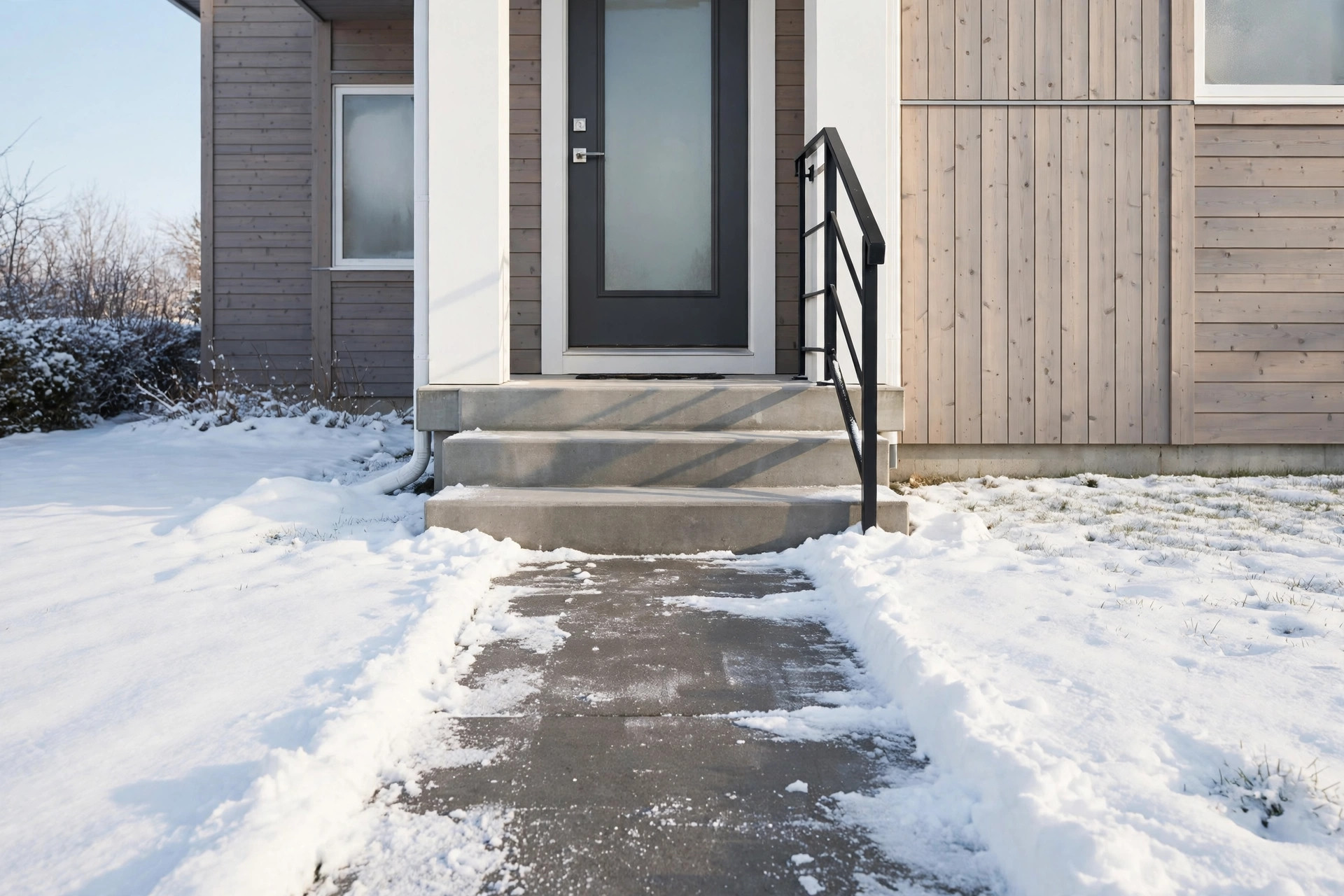
Run the classic example through the framework: a delivery person slips on an icy front walk and is injured. Someone else is harmed (yes); a failure to clear ice is the kind of accidental, everyday negligence allegation these claims are built on (yes); and no business, vehicle, or rental arrangement is involved (no competing policy). That is the centre of the target. Change one answer — the visitor was a paying customer of a home business, say — and the scenario moves, which is exactly why the framework asks all three questions instead of stopping at the first.
The boundaries readers most often miss
Business activity. IBC warns readers not to assume a home-based business is covered under a personal home insurance policy, identifies liability as perhaps the greatest risk of a home-based business, and gives the example of a customer slipping on an icy walkway while visiting the business. IBC states that the personal liability portion of a homeowner's policy typically will not provide coverage for such business events, and that separate commercial liability coverage is the corresponding protection for a business. Whether customers visit, stock is stored at home, and what the business earns all feed the insurer's assessment — which is why the disclosure conversation has to happen before an incident, not after.
Changes in who lives there. IBC makes the same disclosure point about living arrangements: taking in a tenant or boarder, or offering the home on a home-sharing platform, changes the risk profile of the arrangement and must be discussed with the insurance representative beforehand. IBC warns that failing to disclose an occupancy change may void the policy, and that a homeowner who rents needs landlord-appropriate coverage — which, IBC notes, can itself cover defence costs if a legal claim is issued because tenants or their guests sustain personal injury or damages on the property.
Your own household and your own property. The framework's first question handles most of this: liability is third-party coverage. It is not a fund for the policyholder's own injuries or belongings, and it does not extend to people the policy does not name — IBC's point that a tenant's liability is not included in the landlord's policy cuts in both directions.
Vehicles and other policies. Incidents centred on a vehicle belong to automobile insurance, and other specialised activities can belong to other policies entirely. The home policy is a broad net, not the only net, and assuming it catches everything is how gaps stay invisible until a claim tests them.
If someone is hurt: the general sequence
This is general information about how claims are reported, not instructions for any specific incident, and emergencies always come before paperwork. IBC advises that a policyholder must report an accident or claim to their insurance representative and provide complete, accurate details as soon as possible following a theft, accident, or property damage, and notes that most insurance companies have a 24-hour claims service. IBC also advises keeping the insurer's contact information handy and being as detailed as possible about the circumstances and any resulting damage. Applied to a liability incident, the habits that support any claim apply here too: get anyone injured the help they need, write down what happened while it is fresh, keep any related documents and receipts, and let the insurer's process — not corridor speculation — determine how the claim is handled. What not to do is equally general: do not guess at coverage, yours or anyone else's, before the insurer has the facts and the wording in front of them.
Reading your own declarations page for the liability section
Three things can be checked in five minutes, as information rather than advice. First, find the liability limit itself — the single number that caps both tracks described above. Second, confirm who the policy names, and whether everyone you assume is inside the household coverage actually is. Third, scan the endorsements and exclusions for the boundaries in this guide: business use, tenants or home-sharing, and secondary properties. The Financial Consumer Agency of Canada publishes neutral consumer guidance on home, condo, and tenant insurance, including how premiums are set and how claims work, and it is a good companion for the questions that this five-minute check produces. Anything the check surfaces — a business run from home, a new tenant, a student moving out — is a disclosure to make to your insurance representative promptly, because IBC's guidance treats undisclosed changes, not the changes themselves, as the recurring problem.
FAQ
Does liability coverage only apply at home? Not necessarily. IBC describes dependants potentially remaining covered while living away at school, and liability typically extending to a secondary or seasonal property. The reach of any particular policy is set by its wording, so confirm rather than assume.
If a claim against me fails, was the coverage wasted? No — the defence track is part of the point. IBC's definition includes the cost of defending a lawsuit alongside amounts payable to someone who successfully sues, so the coverage responds to the suit itself, not only to losing it.
My roommate or tenant caused the damage. Does my liability coverage respond for them? IBC states that a home policy covers personal liability for the policyholder, their spouse, and their dependants, and does not include a tenant's personal liability. Adults outside that named group generally need their own policies.
Does liability coverage pay for my own injuries at home? That is not what third-party liability is for — it responds to claims by others against the policyholder. Questions about coverage for your own household's injuries belong with your insurer, who can explain what, if anything, in your policy or other coverage addresses them.
How much liability coverage should a household carry? This guide does not answer that — it is a personal decision that depends on circumstances a general page cannot see. IBC notes only that limits can often be increased; the amount is a conversation for you and a licensed insurance professional.
The short version
- Liability is the outward-facing section: it responds to claims that you are legally responsible for someone else's injury or property damage.
- It does two jobs under one limit: defending you in a lawsuit, and paying amounts you are legally required to pay.
- Per IBC, it covers the policyholder, spouse, and dependants — not a tenant's liability — and can reach dependants at school and secondary properties, subject to wording.
- Business activity, undisclosed tenants or home-sharing, deliberate harm, and vehicle incidents sit at or outside its boundaries.
- Report accidents to your insurer as soon as possible, with complete and accurate details.
General information only — not insurance advice and not legal advice. Liability coverage, limits, extensions, and exclusions vary by insurer and province, and real claims turn on their facts. Talk to a licensed insurance professional about your situation, and treat your own policy document as the final word.
Keep readingNext: What home insurance actually covers (and usually doesn't) →